

Welcome to Collaborative Bee
Quick access to collaborative tools, resources, and documentation.





Project Guidelines & Final Presentation
This section supports student teams working on Collaborative Bee projects such as Bee-Plane and Mini-Bee. It explains how to prepare useful deliverables, document the work, and build a strong final presentation for future teams.
📌 Project Instructions
- Start from existing work: before creating new models or calculations, review the Technical Wiki, BP03 file server, previous reports, CAD models, simulations, and presentations.
- Identify your project scope: specify whether your work concerns Bee-Plane, Mini-Bee, or another Collaborative Bee project, and indicate the targeted TRL level.
- Define clear objectives: explain the problem, the expected results, the technical assumptions, and the deliverables to be produced.
- Use project-management tools: prepare a WBS, planning, risk analysis, RACI matrix, and progress tracking adapted to your team.
- Justify engineering choices: compare several solutions, explain why some options were rejected, and support your final choices with calculations, models, simulations, or documented assumptions.
- Publish reusable results: upload validated reports, CAD exports, source files, datasets, figures, and documentation so future teams can continue the work.
🎤 What Makes a Good Final Presentation?
- Connect to the project: remind the audience how your work contributes to Bee-Plane, Mini-Bee, or the relevant Collaborative Bee project.
- Tell a clear story: context → objectives → method → results → limits → next steps.
- One slide, one message: each slide should communicate one key idea, result, decision, or recommendation.
- Show evidence: include CAD views, diagrams, simulation screenshots, test results, calculations, comparison tables, and clear units.
- Explain the impact: show how the work improves structure, aerodynamics, cockpit design, propulsion, safety, documentation, or project continuity.
- Prepare the handover: finish with published files, open questions, recommendations, and the next actions for future teams.
✅ Final Deliverable Checklist
1. Project Context
Project name, TRL level, objectives, previous work used, and team scope are clearly explained.
2. Technical Evidence
Models, calculations, assumptions, simulations, diagrams, and results are documented and understandable.
3. Reusable Files
Reports, CAD exports, code, datasets, images, and sources are stored on the Wiki, BP03, or shared repository.
4. Continuity
The final presentation explains what is finished, what remains open, and how the next team should continue.
Recommended structure for a final presentation:
Project reminder · Objectives · Methodology · Technical results · Project management · Limits · Deliverables · Next steps
Task achieved under the Lesser Open Bee License 1.3 Chapter 2 Open source – © Coordinator Technoplane SAS.

Bee-Plane
Bee-Plane is a detachable modular medium-range aircraft designed for adaptability. Whether it’s carrying 220 passengers, cargo, medical equipment or firefighting systems, its interchangeable fuselage enables multi-purpose use across industries.
It’s a collaborative R&D initiative combining academic research, industrial design, and innovation in air mobility.
Mini-Bee
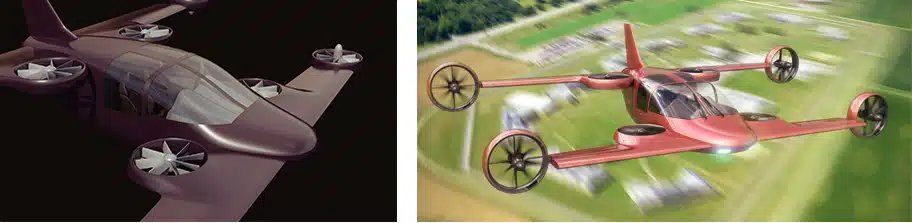
Mini-Bee is a hybrid multi-copter drone born from intense collaboration between universities and industry players. It reached TRL4 in 2022, evolving from TRL1 in 2015, and focuses on vertical takeoff, hybrid propulsion and efficient forward flight.
This initiative highlights the power of collective development — bringing together diverse expertise to rapidly innovate, solve problems, and reduce costs while improving project outcomes.
Why Collaboration Works
- 💡 Shared knowledge: Different actors bring unique insights and capabilities.
- 🔍 Transparency: Open dialogue and documentation builds trust.
- ⚙️ Efficiency: Resource pooling cuts down cost and boosts speed.
- 🧭 Better decisions: Diverse perspectives lead to smarter outcomes.
- 📈 Higher impact: Teams achieve more when working together.
Why We Use an Open Source Licence
- 🔓 Accessibility: All partners can view and modify the code, models and documentation.
- 🛠️ Flexibility: Work can be reused across academic, startup and industrial contexts.
- 👀 Visibility: Everyone can understand how Bee-Plane, Mini-Bee and related projects evolve.
- 🚀 Continuity: New teams can continue previous work instead of restarting from scratch.
- 🤝 Collaboration: The licence supports shared engineering while keeping clear rules for participants.
⚠️ Note: All public deliverables, reports, models, datasets, presentations and wiki pages must include the required Lesser Open Bee License reference.
Why We Share on a Wiki
- 📚 Central access: All stakeholders can view updates, reports, models and data.
- 🔍 Transparency: Past challenges, design choices and solutions remain visible to future teams.
- ⏱️ Faster decisions: Shared documentation reduces confusion and accelerates technical progress.
- 🤝 Team synergy: Teams from different schools can avoid duplicated effort and coordinate more easily.
- 🎯 Better results: Structured knowledge makes innovation easier to validate, improve and transmit.